Bring a Result
Guess what a car will sell for, follow other players in real time, and see how close you get when the auction ends.
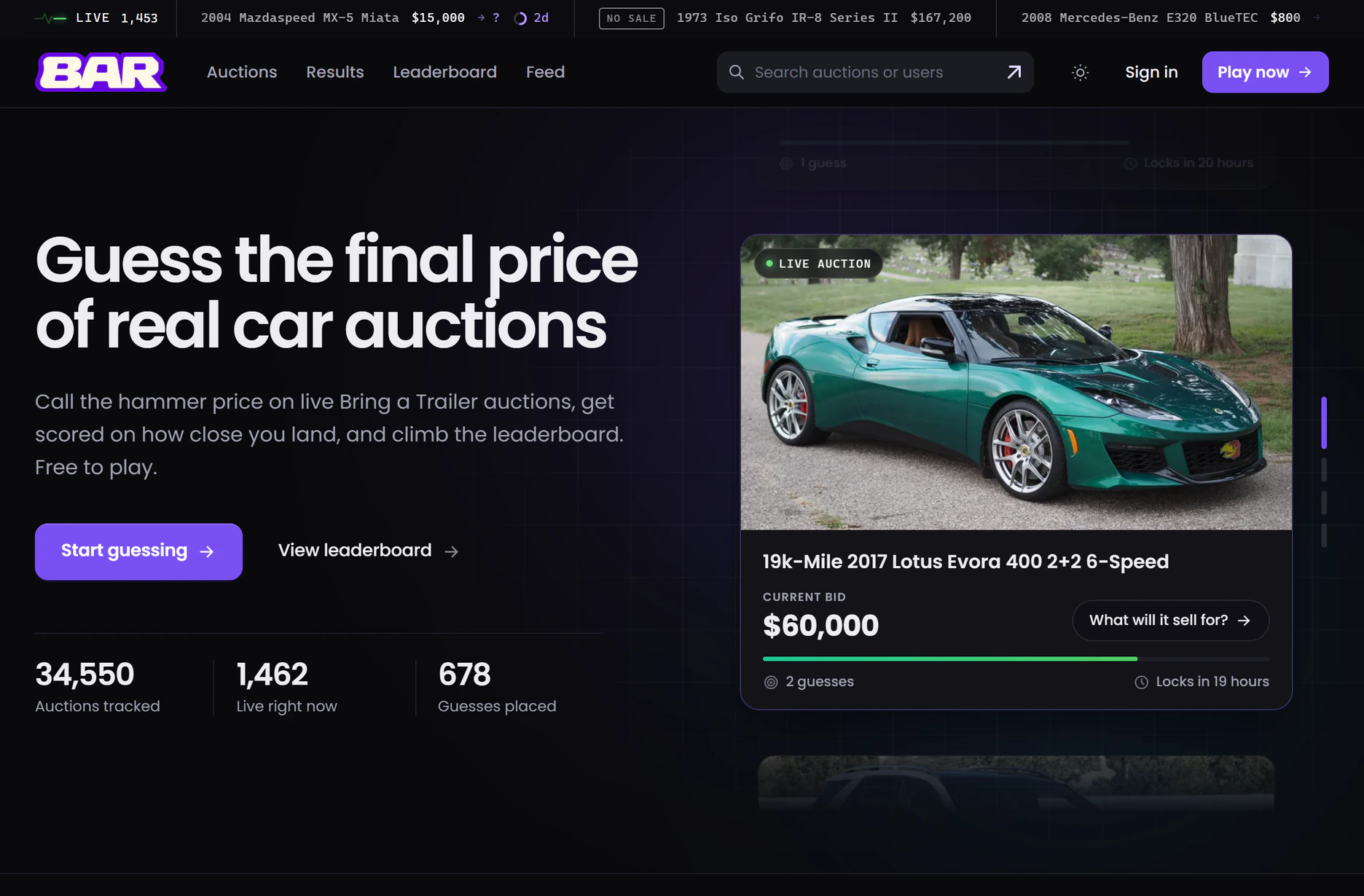
A car obsession turned into a multiplayer game
Following car auctions comes with a running question: what will this one actually sell for? I started Bring a Result in 2023, before the current AI coding boom, to turn that question into a game. Players predict the final prices of real Bring a Trailer and Cars & Bids auctions, compete on accuracy, and build a track record over time.
The project has continued to evolve. Behind the interface is a system for collecting auction data, managing players and predictions, delivering live updates, and turning finished auctions into scored results. The details below describe that implementation.
Technical details
- Frontend
- Next.js, React, Mantine, and Sass
- Server
- Node.js and Express, with a persistent HTTP and Socket.IO server
- Real time
- Socket.IO over WebSockets, with auction rooms, live guesses, and viewer presence
- Database
- MongoDB and Mongoose, with schemas shared between the frontend and server
- Auction data
- Site-specific collectors using Cheerio, Axios, and Playwright
- Background jobs
- node-cron for auction refreshes and result processing
- Authentication
- NextAuth.js with Google sign-in
Making each auction feel live
Each auction has its own Socket.IO room. When someone opens a listing, their client joins that room and listens for new guesses and viewer updates. The Node.js server tracks connected viewers, combines multiple connections from the same player, and removes them when they leave or disconnect.
A prediction goes through the API and is saved to MongoDB before it is sent to the real-time server. The server broadcasts it to the matching auction room, and the React interface merges it into the guess list while preserving the selected sort order. Players see activity without refreshing the page, and updates stay scoped to the auction they are watching.
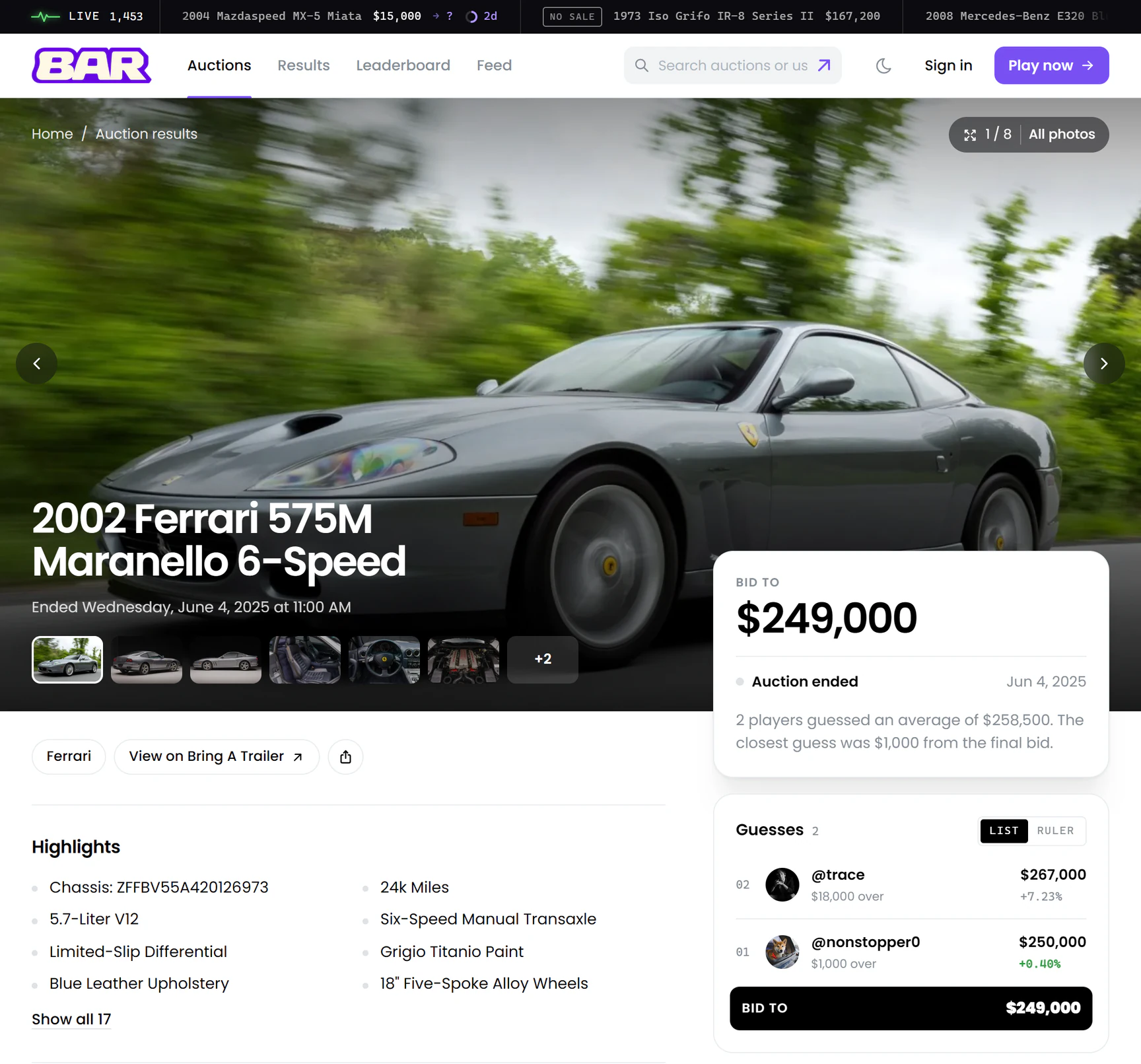
Trading guesses in the feed
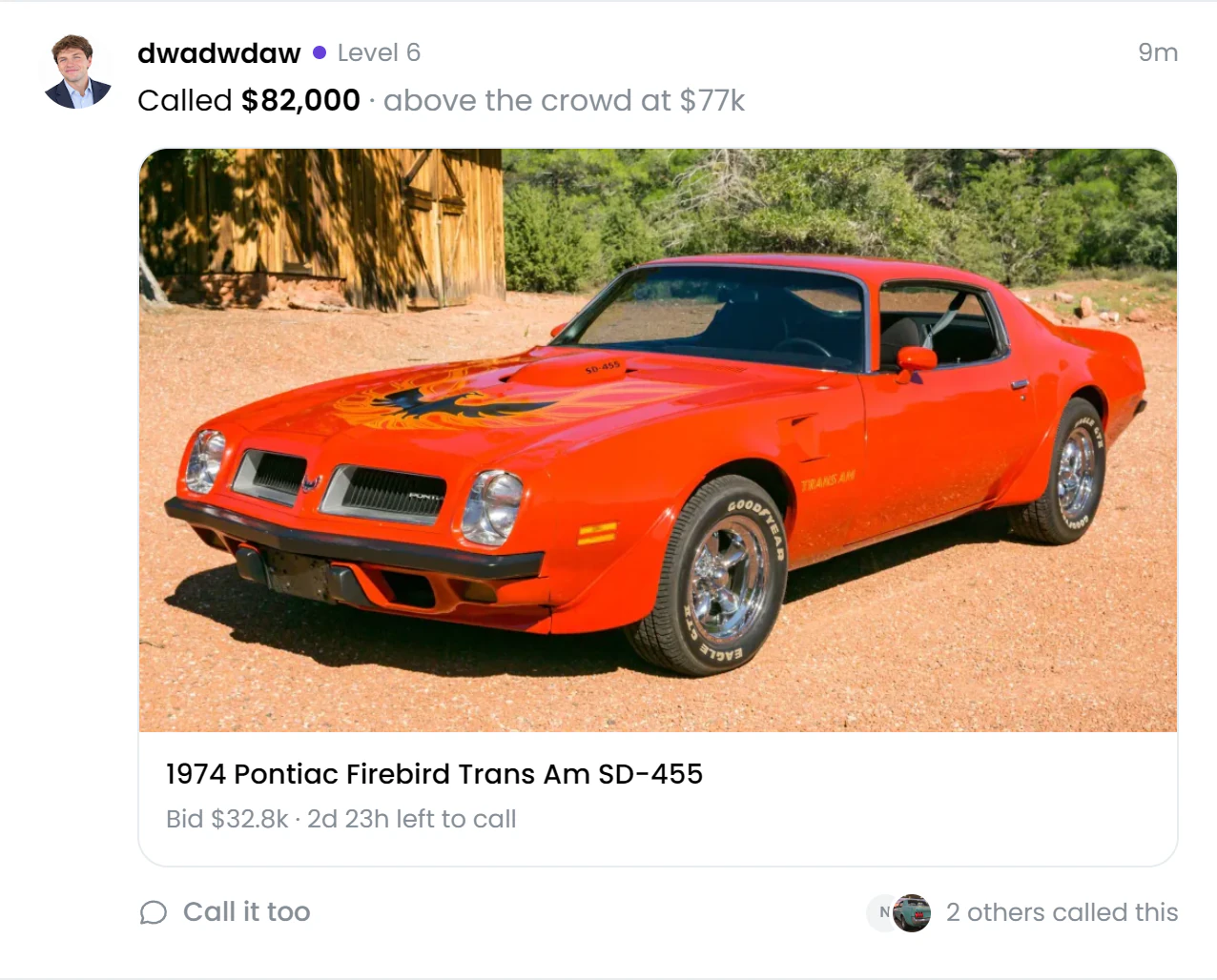
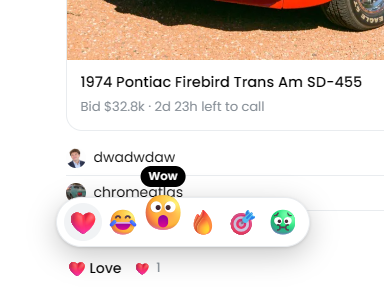
A feed post puts a player’s call beside the car and the crowd’s estimate. Other players can make their own call or leave an emoji reaction.
Turning auction pages into usable data
Bring a Trailer and Cars & Bids have different page structures. I built separate collectors to extract listing details, images, current bids, end times, and final results, then normalize that information into shared MongoDB records. Cheerio handles HTML parsing, while Playwright handles pages that need a browser.
Listings are inserted or updated in batches. Make and model searches can use cached records, and requests for the same scrape share work already in progress. Scheduled jobs refresh auction data and process completed predictions, keeping that work on the backend.
Rules enforced on the server
Guessing closes 24 hours before an auction ends. The API checks the deadline, the player's session, and the current bid before accepting a prediction. Each player gets one guess per auction, backed by a unique database index on the player and listing pair. Those rules apply even if a request bypasses the interface.
From final price to player progression
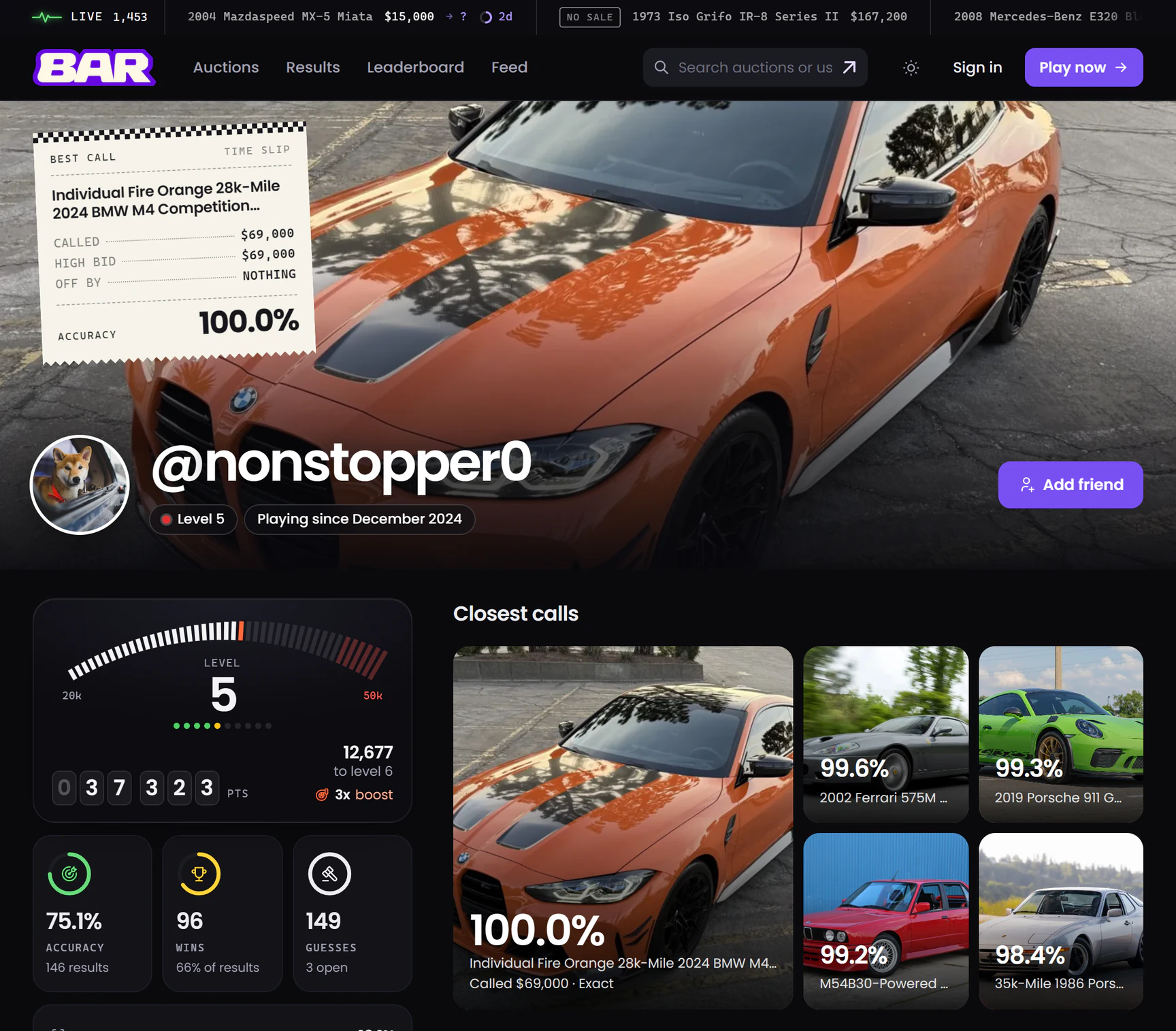
When an auction ends, the result processor groups unprocessed predictions by listing and retrieves the final outcome. It ranks guesses by their percentage error against the final price, then calculates points using accuracy, placement, and player-level multipliers. Results, point totals, and notifications are written in batches.
The processor also handles the less tidy outcomes. If the final price is missing, it defers scoring for a later run. Cancelled auctions close without awarding points, and points are awarded only when the vehicle sells. Profiles, guess histories, leaderboards, friend requests, and result notifications give those individual predictions a longer life in the product.
What I built
This project brought together the parts of full stack development I enjoy most: a responsive interface, a persistent Node.js service, WebSocket connections, shared data models, external data collection, and background processing. The challenge was getting all of those parts to agree about an auction and its players as the data changed.